








- Details
- Written by: Rod Boyle
- Category: Ideas & Questions
- Hits: 74
This is, of course, Don Quixote imagining the windmills to be giants that must be defeated.
Then there was the other "Don" south of the border arguing that Windmills and Turbines should be abolished in favour of coal and gas.
I'd long suspected that Windmills were a scam on the order of "Plastic Bags" or "Paper Cups" - bad for the environment, sure, but not nearly as bad as the paid-for alternatives, I mean - a reusable cloth or plastic bag from Dollarama or WalMart needs to be used hundreds if not thousands of times to justify it's existence relative to a plastic bag - yet few of them reach even a fraction of that. The same with travel mugs vs paper cups. It was - in the end - all a scam to encourage consumers to spend more and feel good about themselves and the environment.
So I asked the ChatGPT:
This is regarding windmills. While loudly touted as a "Green" alternative to oil, how many kilowatt hours are required to make one (Mine or recycle/refine the steel, copper, other elements used in their manufacture, transport, set up, etc) vs the expected output of said windmill over it's lifetime?
"The question you're asking is an important one, and it's worth separating the engineering reality from the marketing.
A wind turbine is not energy-free simply because it generates electricity without burning fuel. Its true energy cost includes the extraction and processing of raw materials, manufacture of components, transportation, construction, maintenance, replacement parts, and eventual dismantling or recycling.
The relevant calculation is called Energy Return on Energy Invested (EROEI), or sometimes Energy Payback Time.
There are two questions worth answering:
-
How much energy does it take to produce, install, maintain and eventually dispose of a wind turbine?
-
How much usable electricity does it generate over its actual working lifetime?
The ratio between those figures tells us how much net energy society actually receives.
1. What does it take to manufacture one?
Let's use a modern, utility-scale, land-based 2 MW wind turbine as our reference. This is a useful comparison because several published lifecycle studies examine turbines of this size.
A turbine isn't just a steel tower and three blades. Its material inventory includes:
|
Component |
Principal materials |
|---|---|
|
Tower |
Steel |
|
Foundation |
Concrete and reinforcing steel |
|
Blades |
Fibreglass, carbon fibre, epoxy resins |
|
Generator |
Copper, steel, sometimes rare-earth magnets |
|
Gearbox |
Steel and iron |
|
Electrical systems |
Copper, aluminium, electronics |
|
Nacelle |
Steel, cast iron, aluminium |
An interesting point: in a Vestas lifecycle assessment of its 3.3 MW turbine, steel and iron account for approximately 82% of turbine mass. When the foundations are included, concrete accounts for approximately 66% of the entire installation's mass.
The mining and processing of these materials are not trivial. Iron ore must be mined, concentrated and smelted; copper ore must be mined, crushed, concentrated and refined; and the production of aluminium and composite materials is energy intensive.
One important qualification: lifecycle assessments generally account for the energy used in producing these materials, rather than simply adding up the electricity consumed at the turbine factory. Some of that energy comes from coal, natural gas and other fuels.
2. How much energy does it take?
There are several published lifecycle assessments worth examining.
|
Study |
Turbine |
Energy payback |
|---|---|---|
|
Renewable Energy, 2012 |
1.8–2 MW |
7 months |
|
Oregon State University, 2014 |
2 MW |
5.2–6.4 months |
|
New Zealand lifecycle study, 2024 |
4.3 MW |
4.8–6 months |
|
Empirical lifecycle study, 2025 |
Wind farm turbines |
6.1 months |
These studies include varying combinations of manufacturing, transportation, installation, maintenance and end-of-life treatment.
The consistent finding is that manufacturing accounts for the largest share of the energy investment. One 2 MW study attributed 84.4% of lifecycle energy requirements to manufacturing, with tower construction particularly significant.
3. Now let's calculate the actual lifetime return
Consider a 2 MW turbine operating at a 35% average capacity factor.
That means it produces, on average, 35% of its theoretical maximum output.
6,132,000 kWh
Annual electricity production
Assuming a 20-year working life:
122,640,000 kWh
Total lifetime electricity production
Now let's apply the published energy payback figures.
A seven-month payback at this production rate represents approximately:
So, as an illustrative electricity-equivalent calculation:
-
Energy invested: approximately 3.58 million kWh.
-
Lifetime generation: approximately 122.64 million kWh.
-
Energy returned: approximately 34 times the initial investment.
20-year lifetime at 35% capacity factor; 7-month energy payback assumption.

4. What does this mean over its lifetime?
The illustrative 20-year balance
Energy invested
3.58 million
kWh equivalentEnergy generated
122.64 million
kWhNet energy surplus
119.06 million
kWhEnergy return ratio
34:1
ApproximateImportant technical qualification: The calculation above translates the seven-month payback assumption into an electricity-equivalent figure. Published lifecycle studies don't all use identical energy accounting conventions. Some count primary energy consumed in producing fuels and electricity, while the output is measured as electricity. Therefore, 3.58 million kWh should be treated as an illustrative estimate, not a measured manufacturing electricity bill.
Also, this is a turbine-level calculation. It does not necessarily include the full cost of grid expansion, transmission, backup generation, or additional storage needed to accommodate variable generation.
5. What about recycling?
This is where things get interesting.
Steel, copper and aluminium are recyclable, and recycling can substantially reduce the energy required for future manufacturing.
However, there are complications:
-
Steel and copper can be recovered and reused relatively effectively.
-
Rare-earth magnets can be recycled, but recovery is more complicated.
-
Fibreglass and carbon-fibre blades are considerably more problematic.
-
Concrete foundations are generally demolished, with material often downcycled rather than returned to equivalent-quality concrete production.
A 2012 lifecycle study examined recycling scenarios and found that recycling improved the energy balance.
In other words, a turbine doesn't simply disappear when its useful life ends. There is an additional industrial process involved in dealing with it.
6. Where I think the real questions lie
I wouldn't conclude from these figures that wind power is an energy scam. The available lifecycle research suggests that properly sited, utility-scale wind turbines produce considerably more energy than is invested in them.
But I would raise four important questions that often get lost in the public discussion:
1. Location matters enormously.
A turbine in a consistently windy location can repay its energy investment relatively quickly. Put the same turbine somewhere with mediocre wind resources and its economics and energy return deteriorate.
2. What happens after 20–25 years?
The foundation and tower may remain serviceable, but blades, generators, gearboxes and other components may need replacement. Repowering is not free.
3. What is the cost of intermittency?
A turbine produces electricity when the wind blows, not necessarily when electricity is needed. Storage, transmission and balancing systems have their own material and energy costs. These are not always fully allocated to individual turbine lifecycle assessments.
4. What is the actual environmental cost of mining?
The extraction of copper, iron, aluminium, rare earths and other minerals has environmental consequences beyond energy consumption: tailings, water use, habitat disturbance, chemical processing and waste.
These deserve scrutiny even if the energy balance is positive.
My conclusion
The best available lifecycle studies suggest that a modern, well-sited, large wind turbine typically repays its embodied energy in roughly 5–12 months, and then generates net energy for the remainder of its working life.
That is a reasonably impressive energy return.
But I would be cautious about accepting a turbine's published energy-payback figure as the complete environmental balance of a wind farm or an electricity system.
There is a substantial difference between:
-
A turbine being energy-positive.
-
A wind farm being environmentally sustainable.
-
A national electricity grid being economically and technically sustainable with a high proportion of wind power.
Those are three different propositions.
One further investigation I think would be particularly worthwhile: comparing the full cradle-to-grave energy and material costs of wind, solar, hydroelectric, nuclear, natural gas and coal, using the same accounting boundaries and equivalent electricity output.
That would give us a much more meaningful comparison than simply labelling one technology green and another dirty."
***
So I was wrong. I'm actually glad.
- Details
- Written by: Rod Boyle
- Category: Ideas & Questions
- Hits: 85
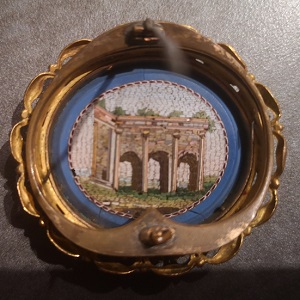
A rather curios African-American tradition of honouring their dead by ornamenting a jug with possessions they had while living:
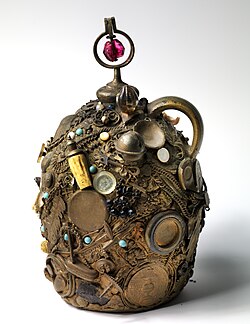
Link: Wiki, Memory Jug
- Details
- Written by: Rod Boyle
- Category: Ideas & Questions
- Hits: 158
An interesting experiment that suggests present actions can influence past events. Which is an interesting thing to even conceive, let alone find a way to test...
- Details
- Written by: Rod Boyle
- Category: Ideas & Questions
- Hits: 140
An interesting take on the idea of mind, that a substantial portion of it lies outside of our brain.
Link: Wikipedia on the Extended Mind Hypothesis
I regard this less as a Hypothesis than a way of reframing our ideas of mind - mind is shaped not only by our environment, is more than the sum of our own memories (think film and books), is in fact extended everywhere we can see and a great many places we cannot.
We can store our thoughts on paper, in computers, share them around the world, words, videos, can provoke responses, themselves extending our minds, our physical place - house, apartment, furnishings, knick-knacks, all contribute to the quality of mind, all are governed, managed, we can set up our computers, AI bot agents, to furnish us with news we want (or need), we can disregard the evidence of our senses and education in favour of what our phones tell us, our memories...
And - these media allow us to extend our mind both forward and backwards through time, we can remember fondly their acquisition just as others may remember us in the inheritance of said objects, the theory implies the existence of the person beyond their mortal lives...
- Details
- Written by: Rod Boyle
- Category: Ideas & Questions
- Hits: 146
This, inspired by the myth of Orpheus & Eurydice, or Lot's Wife, an analysis of the "Don't Look Back!" motif in folktales, legends and mythology.
I didn't write this, merely asked Claude AI to give me a summing up. It did well:
“Don’t Look Back” in Myth, Legend, and Folklore
In folklore studies this is often indexed as a taboo motif (Stith Thompson’s Motif-Index files “looking back” as a taboo under the C300s). It almost always appears at a threshold: leaving a doomed city, the underworld, or the otherworld.
The Tales
1. Lot’s Wife (Hebrew Bible, Genesis 19)
Angels tell Lot’s family to flee Sodom and not look back. Lot’s wife does and is turned into a pillar of salt. Jesus later invokes her in Luke 17:32 (“Remember Lot’s wife”) and says in Luke 9:62 that no one who looks back after setting a hand to the plow is fit for the kingdom.
2. Orpheus and Eurydice (Greek)
Orpheus charms Hades into releasing his dead wife on the condition that he not look back until they reach the surface. At the last moment he turns, and she vanishes back into the underworld forever.
3. Izanagi and Izanami (Japanese, Kojiki and Nihon Shoki)
Izanagi follows his dead wife Izanami into Yomi, the land of the dead. She asks him not to look at her, but he does and sees her decaying body. He flees, pursued by her furies, and seals the passage with a boulder. This is a close cousin of the motif: the taboo is “don’t look at the dead,” and the result is permanent separation of life and death.
4. Native American “Orpheus” Tales (Cherokee, Yuma, Ojibwe, Tahltan, and others)
A widower journeys to the land of the dead to retrieve his wife and is allowed to bring her back if he obeys a taboo (often not touching her, not looking, or not speaking until a set time). He breaks it, and she is lost. Scholars have long debated whether these are independent parallels or influenced by European tellings.
5. Oisín and Tír na nÓg (Irish)
Oisín returns from the Otherworld, where he has lived for what felt like three years but was three hundred, with a warning never to touch the ground. He falls from his horse, instantly ages, and loses his youth. This is a variant: the taboo is on touching the mortal world rather than looking back.
6. Forbidden-Gaze Relatives
These aren’t “looking back” strictly, but they share the logic that looking at the wrong thing at the wrong time destroys a bond:
- Cupid and Psyche (Roman): Psyche must not look at her husband’s face.
- The Crane Wife (Japanese): the husband must not look into the weaving room.
- Bluebeard (European): the wife must not open one door.
- Melusine (French): the husband must not see her on Saturdays.
7. Folk Beliefs and Customs
Many cultures advise not looking back when leaving a graveyard or funeral, when walking away from a ritual that has sent off spirits, or when someone calls your name at night on a lonely road. The assumption is that looking back invites the dead or spirits to follow you.
What It Means: Symbolic Interpretations
Attachment to the past. The most common reading is that clinging to what’s behind you prevents transformation. Lot’s wife is the classic image of nostalgia that petrifies: she literally becomes fixed in place, unable to move forward.
Obedience versus doubt. Orpheus turns because he doubts: he can’t hear Eurydice’s footsteps and fears he’s been tricked. The test is trust, in the gods, in the process, in a future you can’t yet see. Looking back is the demand for proof, and faith traditions often treat that demand as the failure itself.
Death is final. Many of these stories are about the boundary between the living and the dead being non-negotiable. The backward glance is the mourner’s refusal to accept loss, and the story enforces acceptance. They can be read as mythic models of grief: you may visit the dead in imagination, but you can’t bring them back.
Liminality and ritual. Thresholds are dangerous in ritual thinking, and the traveler must stay focused until fully through. Looking back means you are still “half in” the old state, so the transition fails, which is why the same logic shows up in funeral customs.
The destructive gaze. Some interpreters, notably the writer Maurice Blanchot reading Orpheus, see the glance as the moment when desire to possess or fully see the beloved destroys it. For Blanchot, Orpheus’s look is also the artist’s: the song can only exist by risking and losing its object. Orpheus achieves the art, not the woman.
Compassion or curiosity as transgression. Rabbinic commentary offers a more sympathetic view: Lot’s wife may have looked back out of concern for the family she was leaving behind. The tale then becomes a harsh meditation on the cost of leaving, where even a natural human impulse is treated as fatal.
Psychological reading. Jungians and others read it as the tension between ego and the unconscious: you can descend and retrieve something, but you must return to ordinary consciousness without turning back for confirmation, or the retrieved content dissolves.
Common Thread
In nearly every version, the thing you leave behind is something you shouldn’t or can’t keep: a destroyed world, a dead lover, a past self. Looking back is the moment of attachment, and the story punishes it. Different traditions disagree on whether that’s a lesson in faith, a model of grief, or a tragedy about the limits of human love.